

Minimum age 9 with gear fitted by the guide, up to 2 hours on the ice and a 4.9 rating from 340+ reviews.

A Mount Cook helicopter hike puts crampons on the Tasman Glacier, New Zealand's longest, after a short scenic flight from Mount Cook Airport. This independent site compares eight bookable heli hikes and glacier flights and links straight to the booking pages.
from NZ$3798 tripsCompare Tours
Minimum age 9 with gear fitted by the guide, up to 2 hours on the ice and a 4.9 rating from 340+ reviews.

Two scenic flights with a 2 hour guided hike, minimum age 10, and 24 hour free cancellation.
The six cards in this section sit in order of verified review count, not price, so a cheaper flight can appear below a pricier hike purely because fewer people have reviewed it. Review counts with a plus sign are floors, so 340+ means at least 340.
The Tasman Glacier Heli Hike With Mt Cook Glacier Guiding leads with a 4.9 rating from 340+ reviews, from NZ$1,021 per person. Second is the Tasman Glacier Heli Hike With The Helicopter Line, 4.8 from 270+ reviews, also from NZ$1,021 per person. These two cards are the same guided hike sold under different operator brands: one guided by Mt Cook Glacier Guiding with Mount Cook Ski Planes aircraft, the other flown by The Helicopter Line and guided by Alpine Guides. They are alternative booking routes, not rivals, and each card carries its own age, duration and cancellation terms from its operator.
Below them come the Helicopter Line 55-minute glacier flight (140+ reviews, from NZ$949 per person), the True South Queenstown fly-and-hike day (4.9 from 80+, from NZ$2,149 per person), the Cheeky Kiwi bus-and-hike day (68 reviews, from NZ$1,210 per person) and the INFLITE 25-minute landing flight (54 reviews, from NZ$379 per person).

The longest flight here at 55 minutes, covering Aoraki, Tasman Glacier and the West Coast glaciers with a snow landing.

Fly from Queenstown by fixed-wing with a guaranteed window seat, then heli hike with a mountaineering guide.

A fully guided small-group bus day from Queenstown with the Tasman Glacier heli hike built in.

The shortest alpine landing flight at 25 minutes, from NZ$379 per person.
A starting shortlist of the three best-reviewed options. Answer a question to rebuild it.
The picker above this copy sorts the eight trips into two shapes of day. The first question is the real fork: do you want crampons underfoot on glacier ice, or a snow landing seen from the aircraft door?
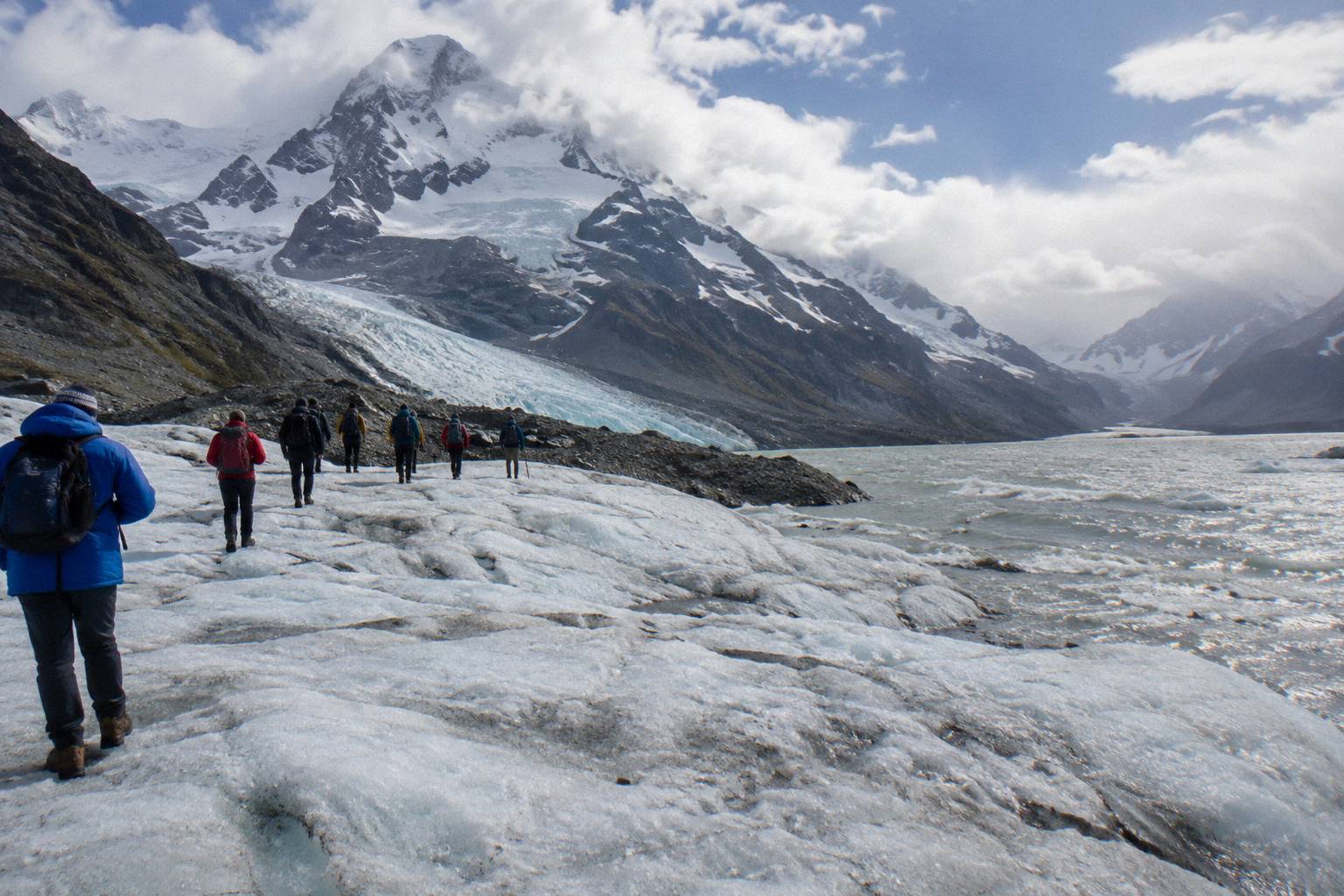
The heli hikes put you on the Tasman Glacier itself. Both Mount Cook Airport departures run about 3 hours in all, with up to 2 hours on the ice, weather permitting, in the words of the operator pages. The listing for the Mt Cook Glacier Guiding hike caps the group at 11; the Helicopter Line listing allows up to 20.
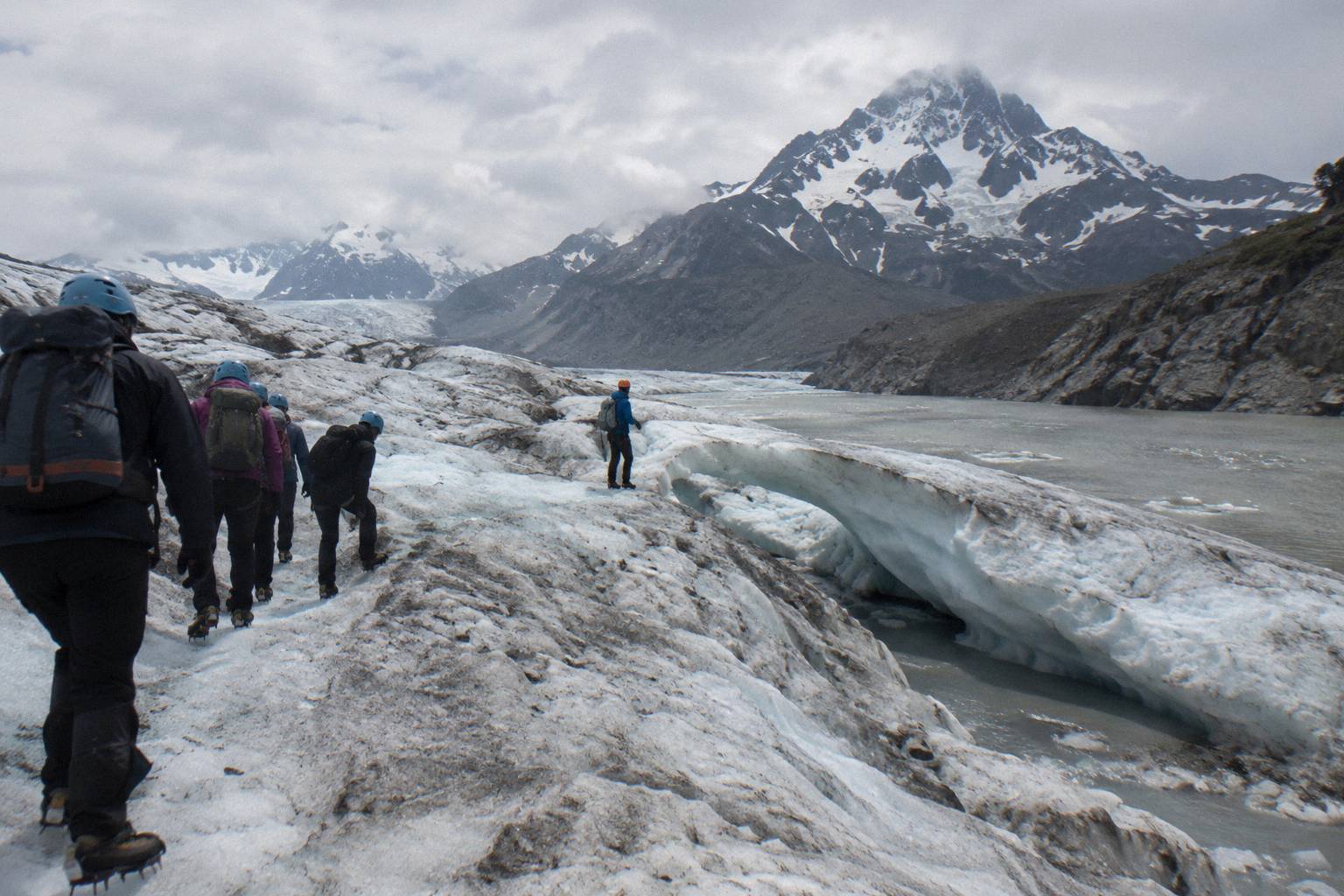
The second question is where your day begins. Six trips check in at Mount Cook itself: two heli hikes and four scenic flights. Two start in Queenstown, one by road with Cheeky Kiwi Travel over roughly 12 hours, one by air with True South Flights over about 7 hours.
The flights with snow landings run 25 to 55 minutes. The INFLITE 25-minute flight departs Mount Cook Airport from NZ$379 per person. The Helicopter Line offers a 40-minute Tasman flight with a 5 to 10 minute snow landing from NZ$713 per person and a 55-minute flight over Aoraki / Mount Cook, the Tasman Glacier and the West Coast glaciers from NZ$949. Glacier Helicopters flies a 30-minute alpine landing from its Bowen Drive base in the village. None of these is a hike: the landing is short and the ice time belongs to the heli hikes.
Drives are DOC's 3.5 h each way, the 5 h hike block is 12 h minus both drives.
Cost tracks time here. A landing flight is the shortest and cheapest entry. A heli hike from Mount Cook sits in the middle. The Queenstown days cost the most because they carry travel to the airport and back. Whatever you pick, weather decides: snow landings and ice time both depend on conditions on the day, and the terms on each booking page govern what happens if a flight cannot run.
The Cheeky Kiwi Travel day runs about 12 hours door to door, meeting at The Station on Shotover Street. It pairs a small-group guided bus run to and from Mount Cook with the Tasman Glacier heli hike, two scenic helicopter flights and the full gear kit: boots, socks, gaiters, crampons or snowshoes, poles and waterproofs. The listing asks for a strong fitness level, a large amount of hiking is involved, and lunch is your own to buy along the way. Group size tops out at 15, and the flight partner decides on the day whether the heli hike flies.
The True South Flights day compresses the journey to about 7 hours. A scenic round-trip fixed-wing flight links Queenstown with Mount Cook, then a helicopter takes the group of up to 11 onto the glacier for a guided hike of approximately 2 hours with a professional mountaineering guide, boots, crampons and safety gear included. The listing price starts at NZ$2,149 per person. A guaranteed window seat on the plane is in the inclusions; lunch is not.
Which suits you depends on the day you want. Travellers already sleeping near the village can walk to a flight or a hike. Those based in Queenstown without a rental car have two packaged options. Anyone short on time, or unsure about a guided ice walk, can take a landing flight and still stand on snow above the glacier country. No single choice outranks another; each listing carries its own cancellation and weather terms.
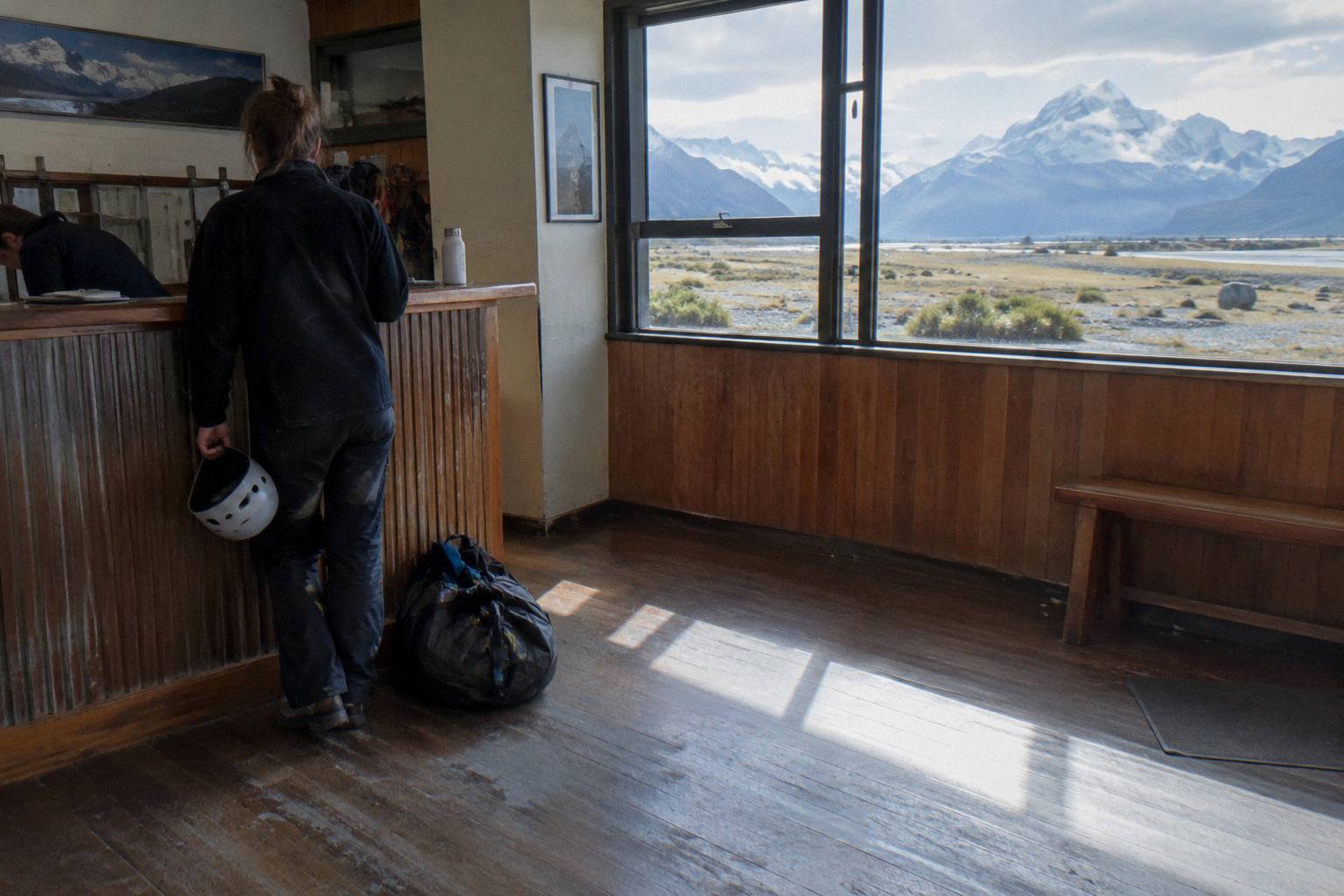
The Helicopter Line asks walkers to check in upstairs at the airport 15 minutes prior to departure. The same operator asks you to call 24 hours ahead for a weather check and to reconfirm the trip, a habit worth copying on any brand: mountain weather changes fast, and fly times are strict. Complimentary transport from the village can be provided on request, in the operator's wording.
Check-in is also where the gear goes on. The listings include leather boots and wool socks, crampons or snowshoes by season, harness where required, poles and waterproof jacket and overtrousers on the Mt Cook Glacier Guiding trip. The Helicopter Line listing covers boots, socks, poles, crampons and waterproofs as needed. Jeans, shorts, drones and loose scarves stay behind.
The two flights share the other hour (3 h minus 2 h), drawn equal.
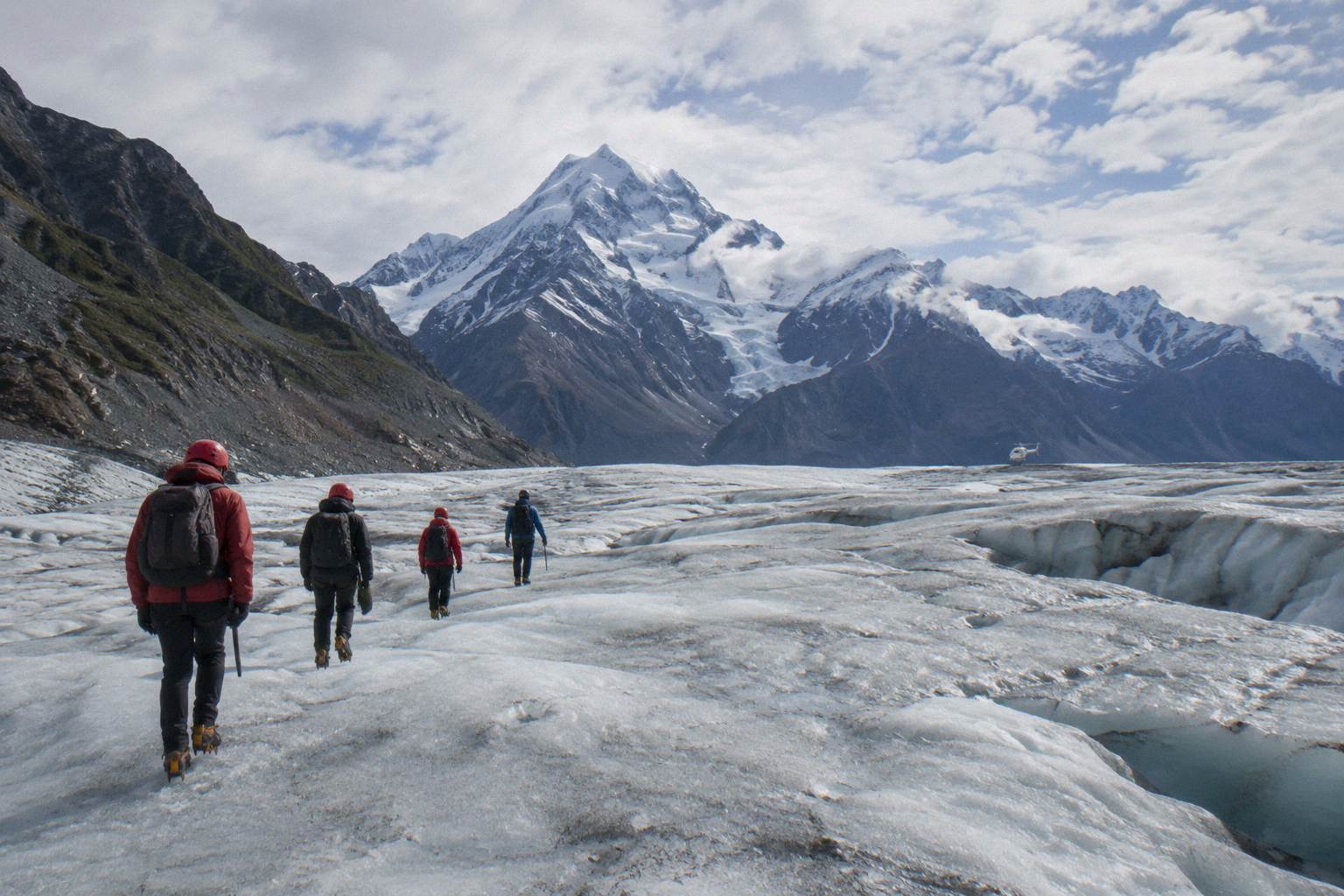
On the ice-free approach you cross the Tasman Valley toward New Zealand's largest and longest glacier, 23 km long by DOC's figures, its lower reaches mantled in rock. Alpine Guides describes the landing as around 1,200 metres above sea level on the Tasman Glacier, a figure that belongs to this standard hike and not to the separate ski-plane trip that reaches about 2,200 metres.
Nothing about the landing is promised in advance. Operators use phrases like weather permitting, and the landing site itself can shift with conditions on the glacier. The guide ratio on the Alpine Guides page is 1:12, the group minimum is 4 per helicopter load, and the booking page for the brand you choose is the authority on the day's final calls.
Guides fit crampons, or snowshoes in winter on the Mt Cook Glacier Guiding wording, and set the pace for the group. The listing for that trip caps numbers at 11; The Helicopter Line listing allows up to 20. Alpine Guides calls the route not a strenuous hike, suited to average fitness, while flagging that knee, hip or back injuries, heart conditions and vertigo make the ice a poor match.
No brand guarantees a set route, an ice cave, crevasse walking or any particular view. Ice caves appear only on a private charter page, conditional on snow and ice, and are not part of these standard hikes. The terrain carries real hazards, in the Helicopter Line's disclosure: falling rocks, ice cliffs, crevasses, changing snow conditions and icy surfaces. Time on the ice, and the landing itself, remain subject to weather and ice on the day.
Alpine Guides describes the return as flying close to the massive 1,000-metre-high Hochstetter Icefall, the frozen cascade spilling from the neve above the glacier's east side. On the Mt Cook Ski Planes ski-plane product the flight home runs along the east side of Aoraki and the same icefall, though that trip is not listed here.
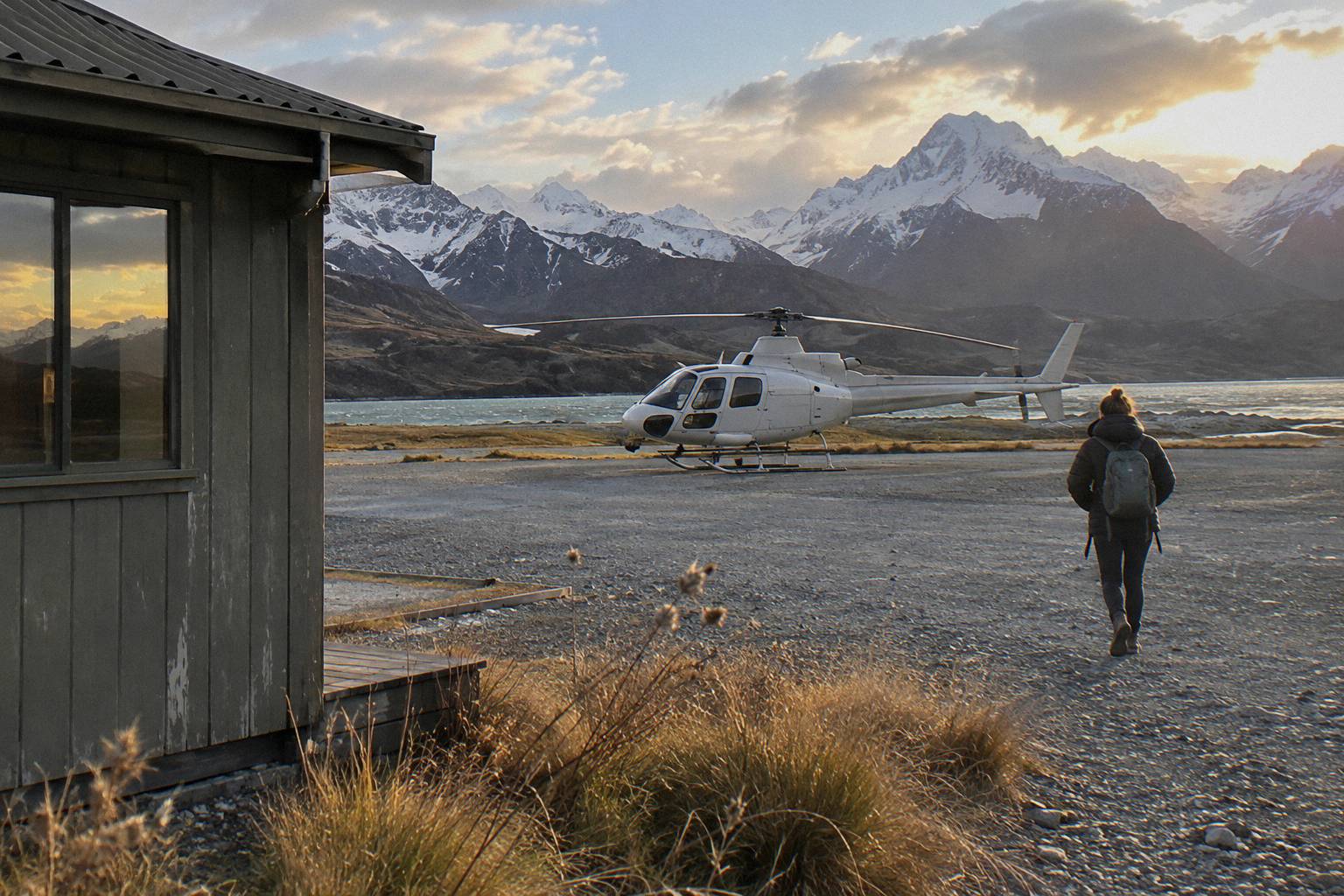
Back at the airport at 656 metres, the day closes where it began, upstairs check-in, gear returned, the village a few minutes down the road. If weather stops either flight, each listing states its own remedy, an alternative date or a refund on the pages here, with the booking page holding the final word.
The comparison table above lays out a fact that surprises many first-time visitors: the Tasman heli hike sold from Mount Cook Airport carries three brands, and the trips compared here cover two of them. Mt Cook Glacier Guiding supplies the guides on one trip, with aircraft from Mount Cook Ski Planes and Helicopters, the INFLITE operator based at the airport. On the other, The Helicopter Line flies and Alpine Guides Ltd, based at 81 Bowen Drive in the village, provides the guiding; the operator page names that partnership directly. Southern Alps Guiding sells the same hike as a third brand, but it is not listed here and cannot be booked here.
One structural quirk is worth knowing before you search: Mt Cook Glacier Guiding has no website of its own. Its guiding pages live on the Mount Cook Ski Planes site, so a search that looks for two companies often finds one.
Details differ by brand and should never be merged. The minimum age on the Mount Cook Ski Planes page for its hike is 9, with under-18s needing parental or guardian consent. The Helicopter Line and Alpine Guides set the minimum at 10, accompanied by a parent or guardian 18+. There is no single correct age for the activity, only per-operator figures. The table above shows all of it side by side, sourced line by line.
Durations differ too, about 3 hours on the Helicopter Line wording against 3.5 hours on the Alpine Guides page, both wrapping up to 2 hours on the ice.
The practical gaps between the two airport hikes are small but real, and each belongs to its operator. Duration is stated as about 3 hours by The Helicopter Line and 3.5 hours by Alpine Guides, with up to 2 hours on the ice in both cases. Gear wording varies: Mount Cook Ski Planes fits crampons in summer and crampons or snowshoes in winter, while the Helicopter Line listing names boots, socks, poles, crampons and waterproofs. Both operators require a minimum of 4 people, and Alpine Guides states a guide ratio of 1:12 per helicopter load.
Weight limits are brand-specific. The 150 kg maximum stated by The Helicopter Line applies to a person in a rear helicopter seat on its aircraft, and to that operator only. The Mt Cook Glacier Guiding listing states no weight limit, so nothing can be printed as one.
Cancellation terms also split. The Helicopter Line offers a full refund or credit with 24 hours notice and the same on its own weather cancellations; inside 24 hours and for no-shows, the full price stands. Alpine Guides allows free cancellation until 24 hours before and does not charge for bad-weather cancellations. Southern Alps Guiding, the third brand not listed here, carries stricter 72-hour wording on its page. None of these can be generalised across brands.
The booking page for each trip is the authority on ages, weights, gear, group sizes, prices and cancellation terms as they stand when you book, and operator pages sit behind those listings for cross-checking. Read the listing, then the operator page, before you commit to a date.
The price and hours bars above carry the listing from-prices, and they split cleanly into two groups. The two Tasman heli hikes from Mount Cook Airport both start from NZ$1,021 per person for about 3 hours door to door, with up to 2 hours on the ice, weather permitting, in each case. The Queenstown bus-and-hike combo runs from NZ$1,210 per person across roughly 12 hours, and the fly-and-hike day from NZ$2,149 per person over about 7 hours. The four scenic flights without a hike sit lower: NZ$379 for 25 minutes, NZ$713 for 40 minutes and NZ$949 for 55 minutes. The 30 minute Glacier Helicopters flight shows no price here.
Read as cost per hour of ice, the two airport hikes are the most direct buy of the set: the NZ$1,021 from-price buys about 3 hours of experience with up to 2 hours on the glacier. Read as cost per hour in the air, the flights are the sharper deal, with the 55 minute Helicopter Line flight at NZ$949 costing less than half a hike seat while covering Aoraki / Mount Cook, the Tasman Glacier and the West Coast glaciers with an alpine snow landing in its inclusions.
| Trip | From (NZD) | Length |
|---|---|---|
| Tasman Glacier Heli Hike With Mt Cook Glacier Guiding | NZ$1,021 | 3 hours |
| Tasman Glacier Heli Hike With The Helicopter Line | NZ$1,021 | 3 hours |
| Queenstown Heli Hike And Bus Tour Via Mount Cook | NZ$1,210 | About 12 hours |
| Queenstown Fly And Heli Hike To Tasman Glacier | NZ$2,149 | About 7 hours |
| INFLITE 25-Minute Alpine Landing Flight | NZ$379 | 25 minutes |
| Helicopter Line 55-Minute Glacier Flight | NZ$949 | 55 minutes |
| Helicopter Line 40-Minute Tasman Landing Flight | NZ$713 | 40 minutes |
| Glacier Helicopters 30-Minute Alpine Landing Flight | Not shown | 30 minutes |
The from-price on every listed row is per person, and season is the main lever the sources name. The listed trips show where price and product type diverge: a 25 minute landing flight from NZ$379, a 40 minute one from NZ$713, a 55 minute one from NZ$949, and a 30 minute Glacier Helicopters flight with no printable price.
Cancellation is where the listed rows are uniform but the wider market is not. Every one of the eight trips carries a 24 hour free cancellation window on its listing. That should not be read as one policy for every brand of the same walk, because the three operators selling the Tasman heli hike state their own terms on their own pages, and the fact sheet marks Mount Cook Ski Planes hike terms as unconfirmed. What the listings do commit to is narrower and firmer: cancel within 24 hours and the price stands, and where the operator cancels for weather the listing terms offer an alternative date or a full refund.
The practical effect on a booking decision is timing. Weather calls on the Tasman can come late, and the Helicopter Line asks for a reconfirmation call 24 hours ahead, which sits exactly on the free cancellation boundary of every listed row.
Landing height is the operator figure, the upper snowfield is where ski planes land, Aoraki is the DOC height.
The altitude scale above runs from the check-in desk to the highest point in the country. Mount Cook Airport, where both listed heli hikes check in, sits at 656 m elevation. The standard heli hike lands around 1,200 m above sea level on the Tasman Glacier, an operator figure from the Alpine Guides page, which puts the walk roughly a kilometre and a half above the airfield in vertical terms. Above that again sits Aoraki / Mount Cook at 3,724 m, New Zealand's tallest peak and one of 19 peaks over 3,000 m inside the national park, per DOC.
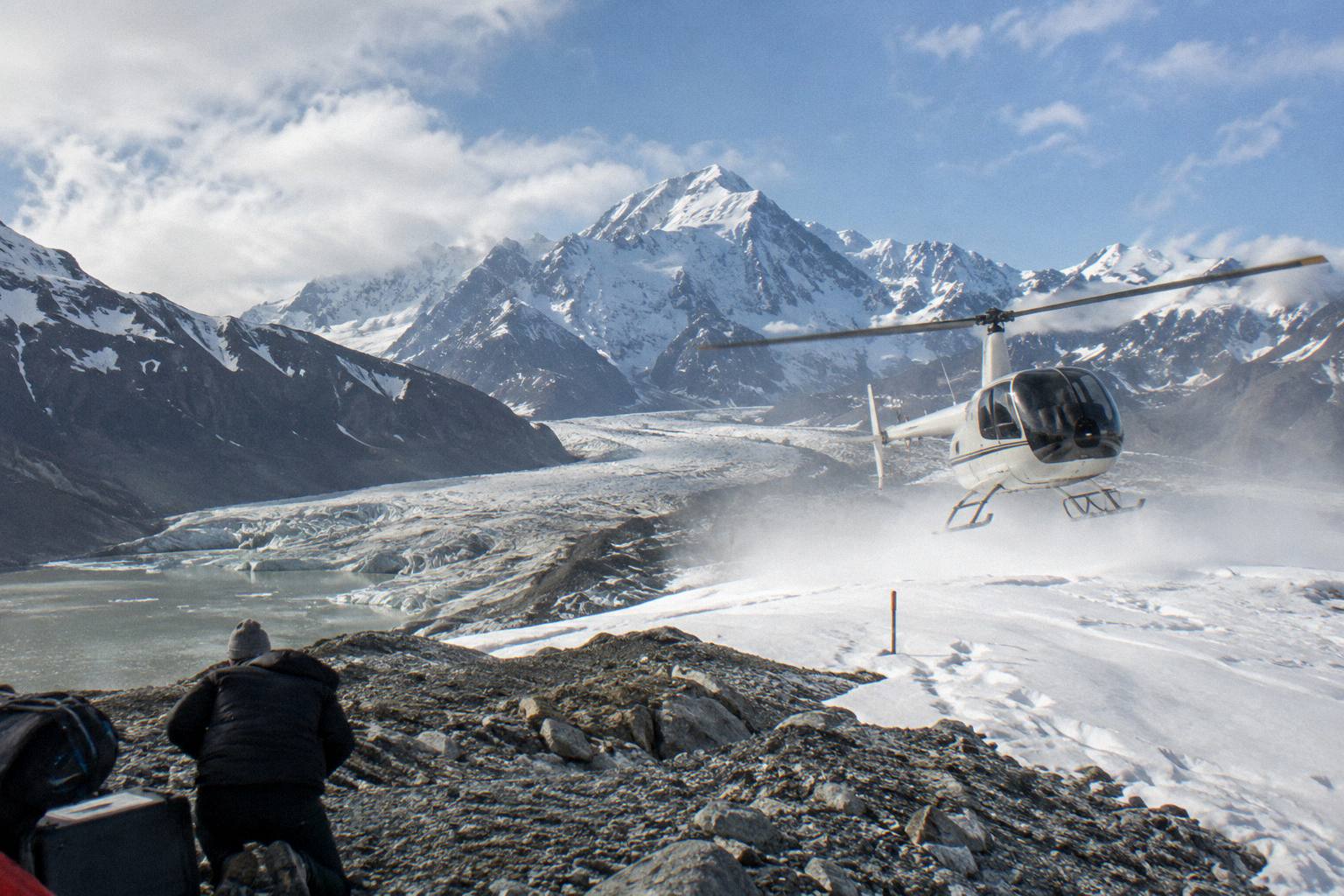
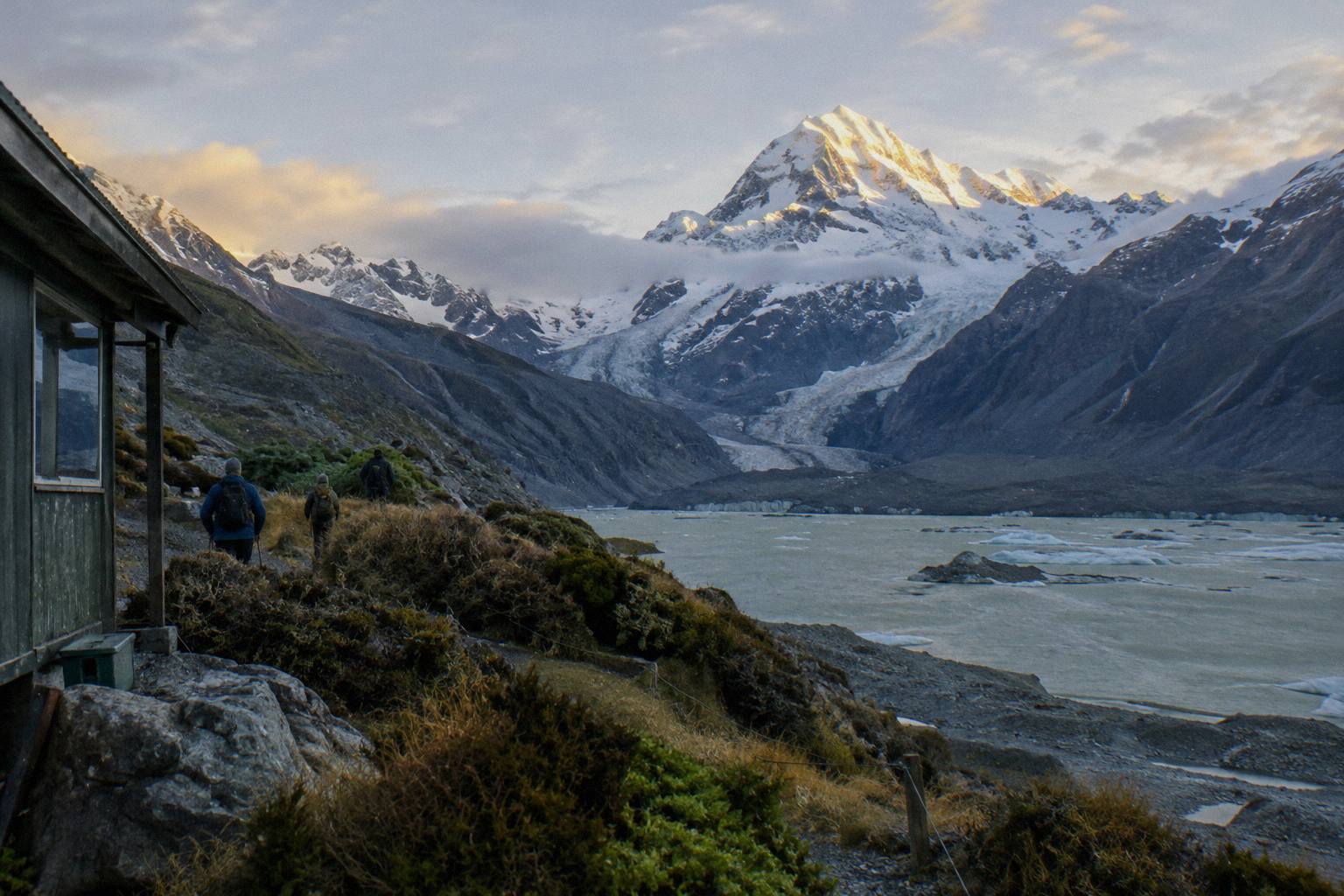
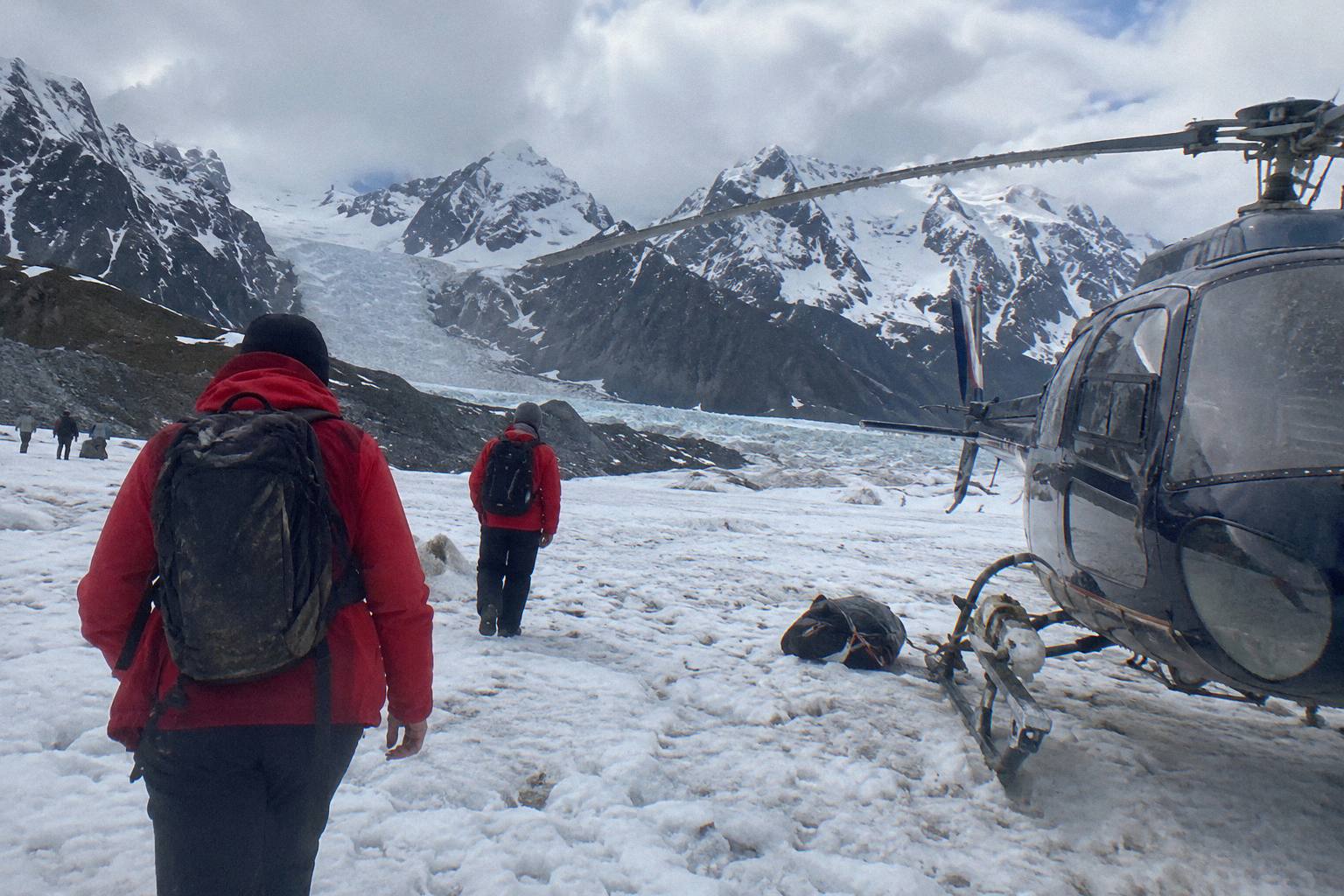
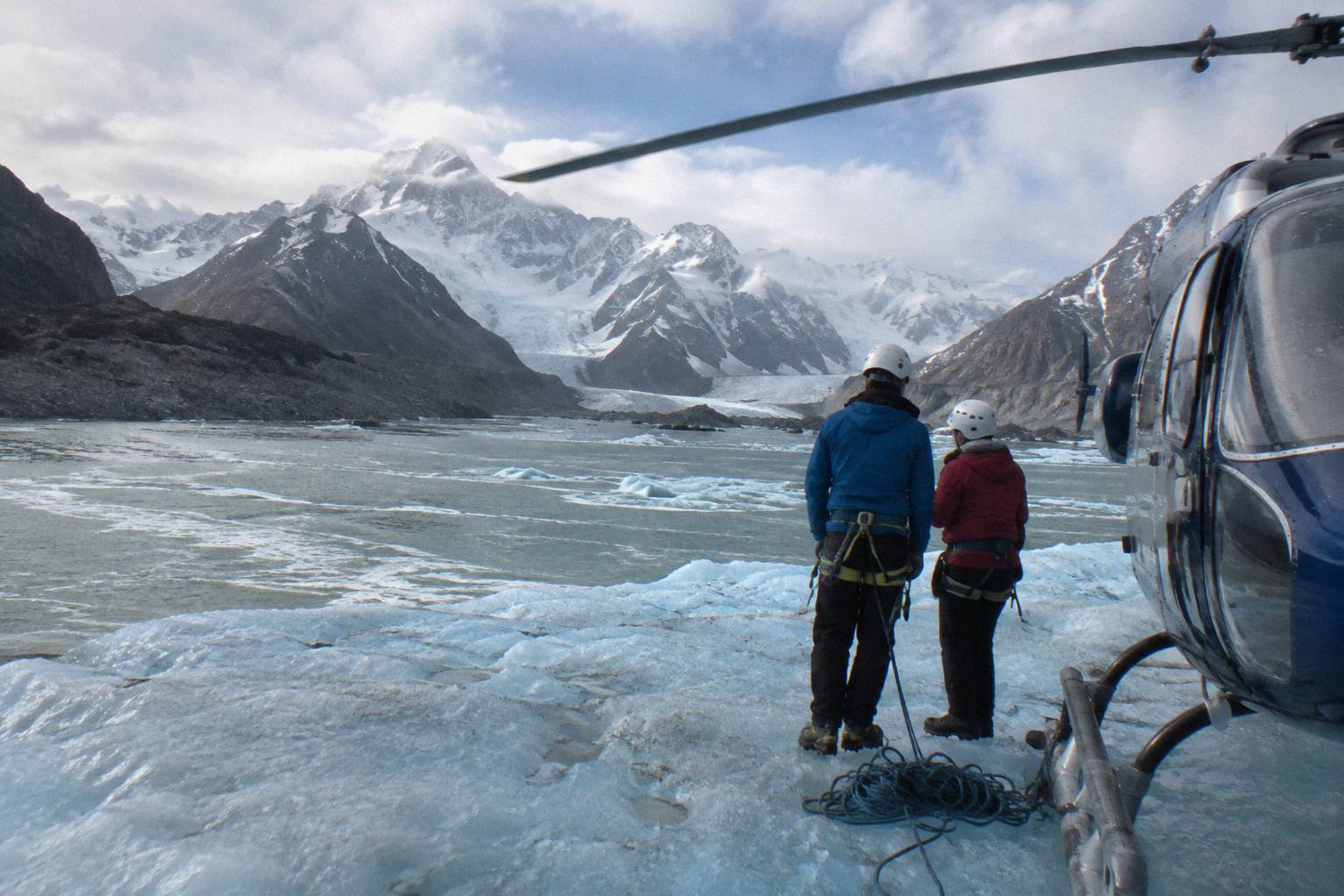
The ice below those peaks is on the same scale. DOC describes the Tasman Glacier as New Zealand's largest and longest, 23 km long, up to 3 km wide and 101 sq km in area, and notes that glaciers cover 40% of the park across five major valley systems, the Godley, Murchison, Tasman, Hooker and Mueller. The park itself is part of the Te Waipounamu South Westland World Heritage Area, and the glacier is visible from the main highway at the park entrance even before any flight lifts off.
One altitude figure on the page belongs to a different product. The 2,200 m upper snowfield landing, about 7,200 ft, is part of a ski-plane trip that is not listed here, and it should not be folded into the standard heli hike's numbers. The hike lands near 1,200 m; the higher figure is another operator's other trip.
101 square kilometres, retreating. The terminal lake did not exist until 1974.
The glacier every one of these trips flies to is shrinking. DOC states it plainly on the Tasman Glacier View Track page: Tasman Lake did not exist until 1974, and it is growing rapidly as the glacier melts. The same DOC page frames the change globally, with Tasman retreating as the climate changes like glaciers worldwide. Earth Sciences New Zealand, NIWA, put the same point in fewer words after its 2026 end-of-summer snowline survey found retained snow on some glaciers: Dr Andrew Lorrey called it only a stay of execution and not a reversal in the long-term decline of ice coverage.
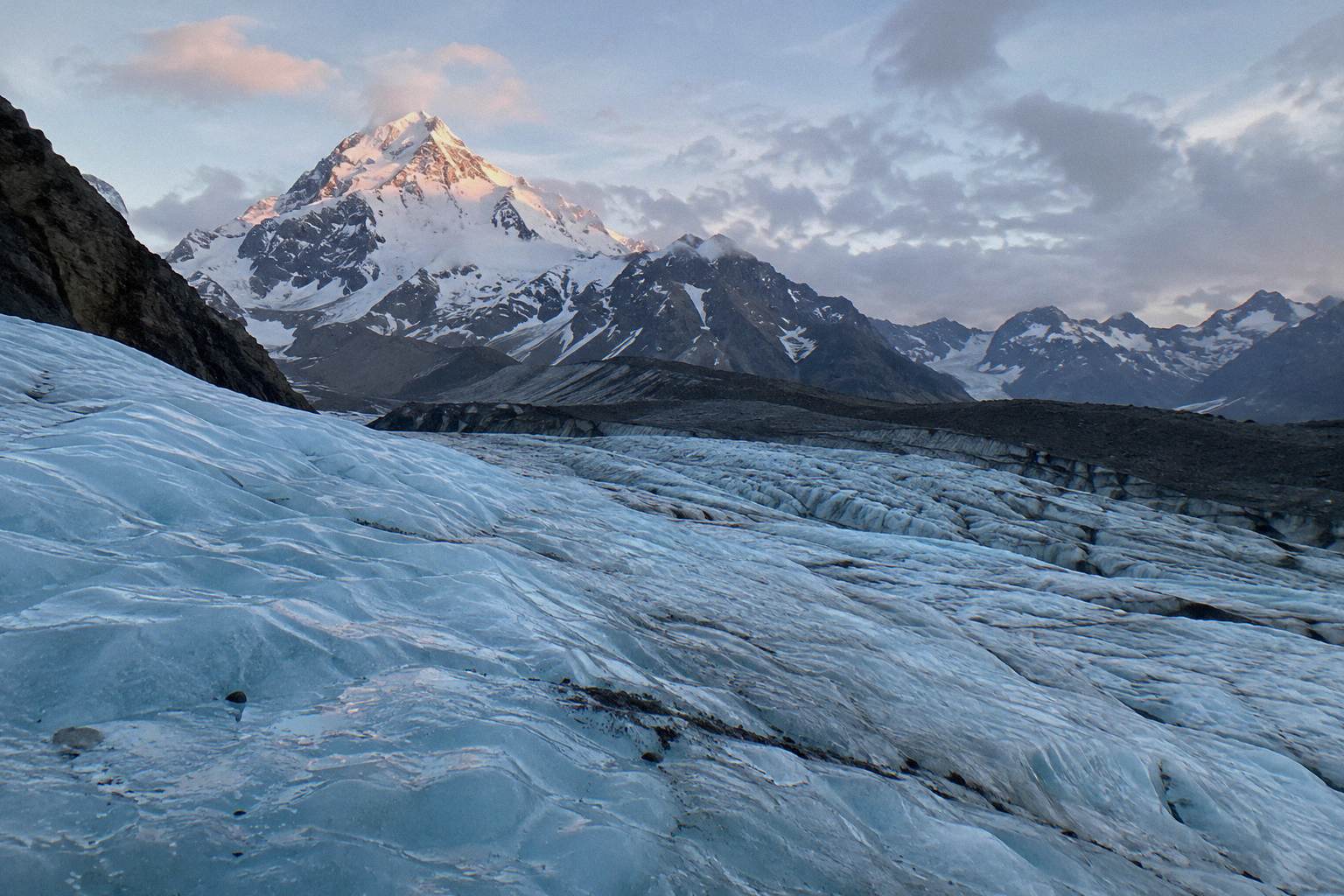
The lower glacier shows the change on foot. DOC notes the lower reaches are covered with rock, which is why the ice a heli hike walks on is reached by air and why the view from the moraine wall looks down on a lake rather than a glacier terminus. Tasman Lake carries its own hazards in the DOC safety material, from unstable icebergs to very cold water.
On the ice itself, The Helicopter Line's page lists the terrain hazards of the glacier: falling rocks, ice cliffs, crevasses, changing snow conditions and icy surfaces, alongside mountain weather that changes rapidly. Those listed hazards are the case for walking with a guide, fitted boots and crampons rather than treating the glacier as open ground. What the operator pages do not describe for the standard hike is crevasse travel.
Loading the map. Every place is also listed below.
Map tiles and place names: © OpenStreetMap contributors
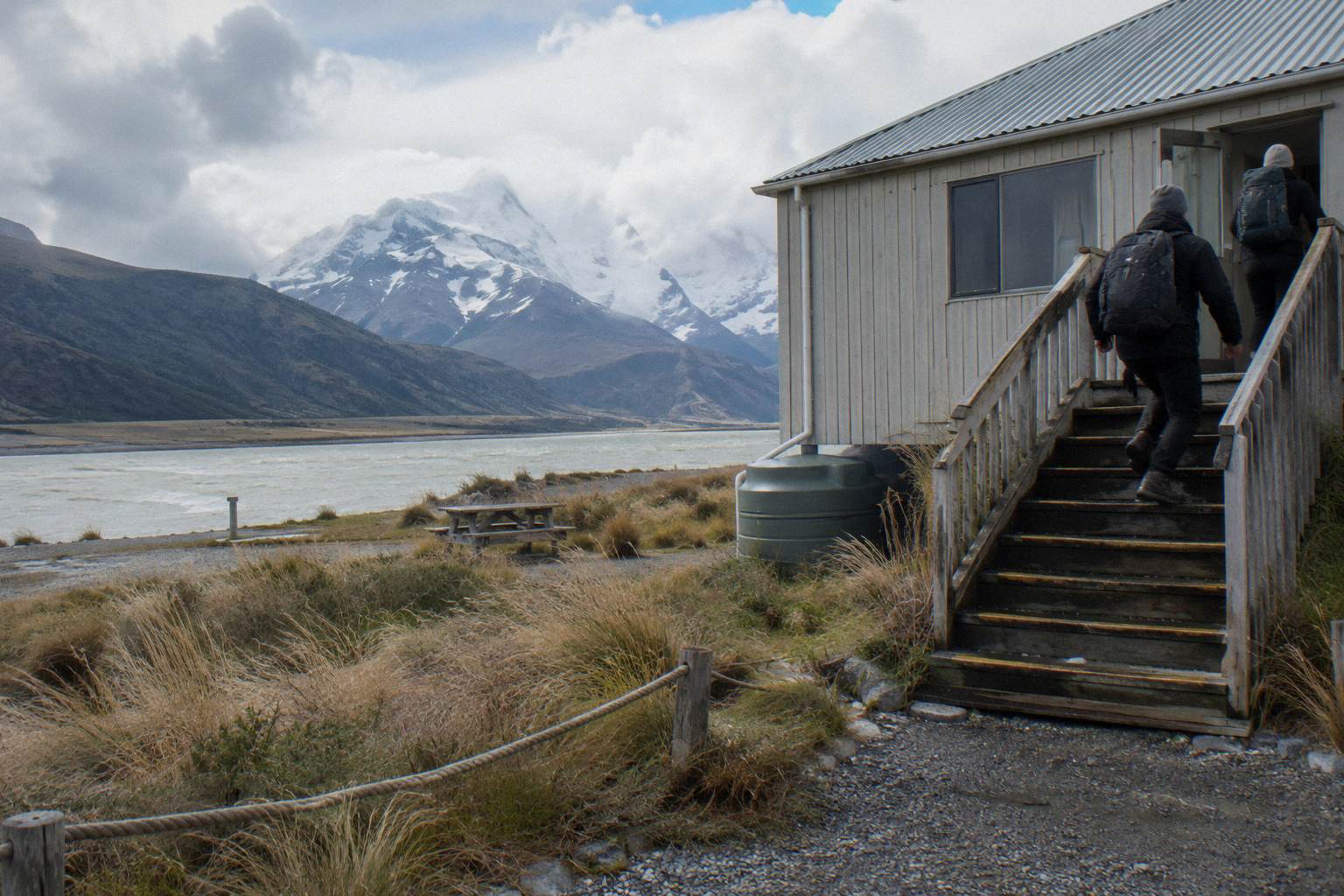
The pin map above marks the two bases that matter for the heli hikes. Both airport hikes check in at Mount Cook Airport on SH80 before the village, at 5260 Mount Cook Road, with the Mount Cook Ski Planes and Helicopters base at the airport itself, reachable on the operator page's line, +64 3 430 8026. The Helicopter Line asks its hikers to check in upstairs at the airport 15 minutes before departure. Alpine Guides, the guiding partner on that trip, keeps its base at 81 Bowen Drive in Aoraki Mount Cook Village, also pinned.
The other pins serve different products and should not be confused with hike check-in. Glentanner Park, further down SH80, is the Helicopter Line base for its scenic flights, not its heli hike. The Tasman Valley car park, a 10 minute drive from the village and free per DOC, is the start of the Tasman Glacier View Track walk, not a flight departure. White Horse Hill is where the Hooker Valley Track begins.
One bridge between village and airfield is worth knowing: The Helicopter Line states that complimentary transport from the village can be provided on request. For anyone staying in the village without a car, that request line is the difference between a walk to the airport and a lift, though the operator's wording leaves it on request rather than scheduled.
DOC's drive times frame how far the airport is from anywhere. Queenstown is 3.5 hours away and Christchurch 4.5 hours, with Twizel the nearest town at 1 hour and Tekapo at 1.5 hours. Access is off SH8 at the end of SH80, and DOC warns that snow can close SH80, with winter access possibly limited from June to September. Twizel and Tekapo hold the nearest supermarkets, worth knowing before the last hour of road.
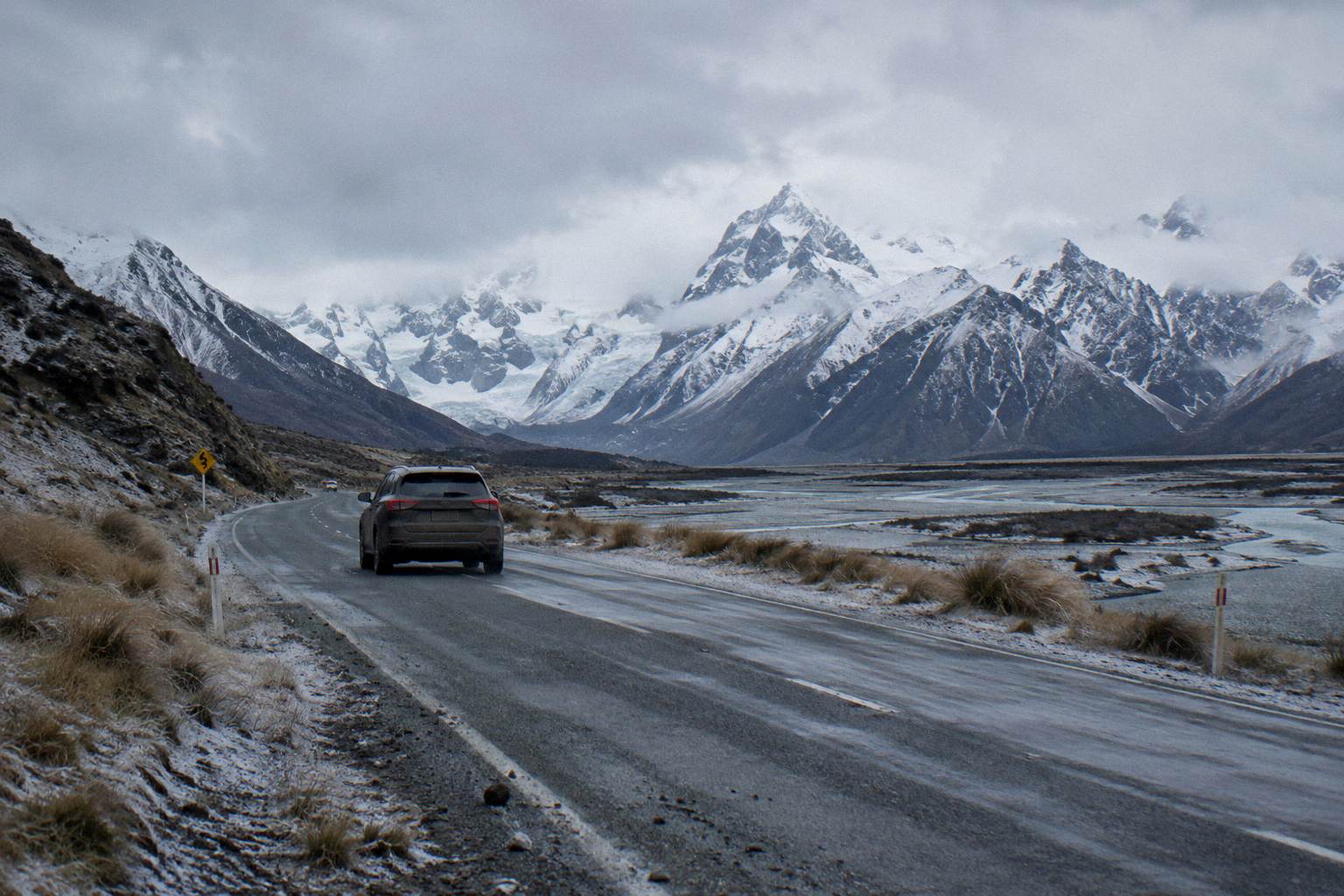
The village itself is small by design. DOC lists a day shelter, a visitor centre, a petrol station and limited cafe, restaurant and bar options, plus a permanent fire ban and a ban on recreational drones anywhere in the park. Avalanches can occur in any season, and there are no dogs allowed.
The two Queenstown combos start differently from everything else compared here. The bus-and-hike day meets at The Station on Shotover Street in central Queenstown, while the fly-and-hike day meets at the True South Flights terminal in Frankton and includes a round-trip fixed-wing leg between Queenstown and Mount Cook in its inclusions before the helicopter flight to the glacier. Both replace the drive entirely, which is the point of their price step.
July shows its mean low and high, January only its mean high.
Alpine Guides says the Tasman heli hike runs all year round, and the gear changes with the season: Mount Cook Ski Planes specifies crampons in summer and crampons and/or snowshoeing in winter, fitted by the guide before the flight. No operator listed here claims a best month, and the site makes no such claim either. What the record shows is a valley with mild summer days and cold winter nights.
The temperature normals recorded at Mount Cook Airport, NIWA figures transcribed on Wikipedia, put the January mean daily maximum at 22 °C. July sits at the other end: a mean daily maximum of 7.9 °C and a mean daily minimum of minus 2.4 °C. June averages minus 1.8 °C overnight. Across the whole year the mean daily maximum is 15.0 °C and the minimum 3.6 °C. Those are airport-elevation numbers from a station at 656 m, not readings from the glacier at around 1,200 m where the hike lands.
Winter shapes access as much as it shapes the ice. DOC warns that winter access may be limited from June to September by snow, and that snow can close SH80, the highway that ends at the village. The month table above lines these figures up month by month so you can read the season against your travel dates. Every trip compared here remains weather dependent regardless of when you book, and the operators keep the right to shift or cancel a day around conditions.
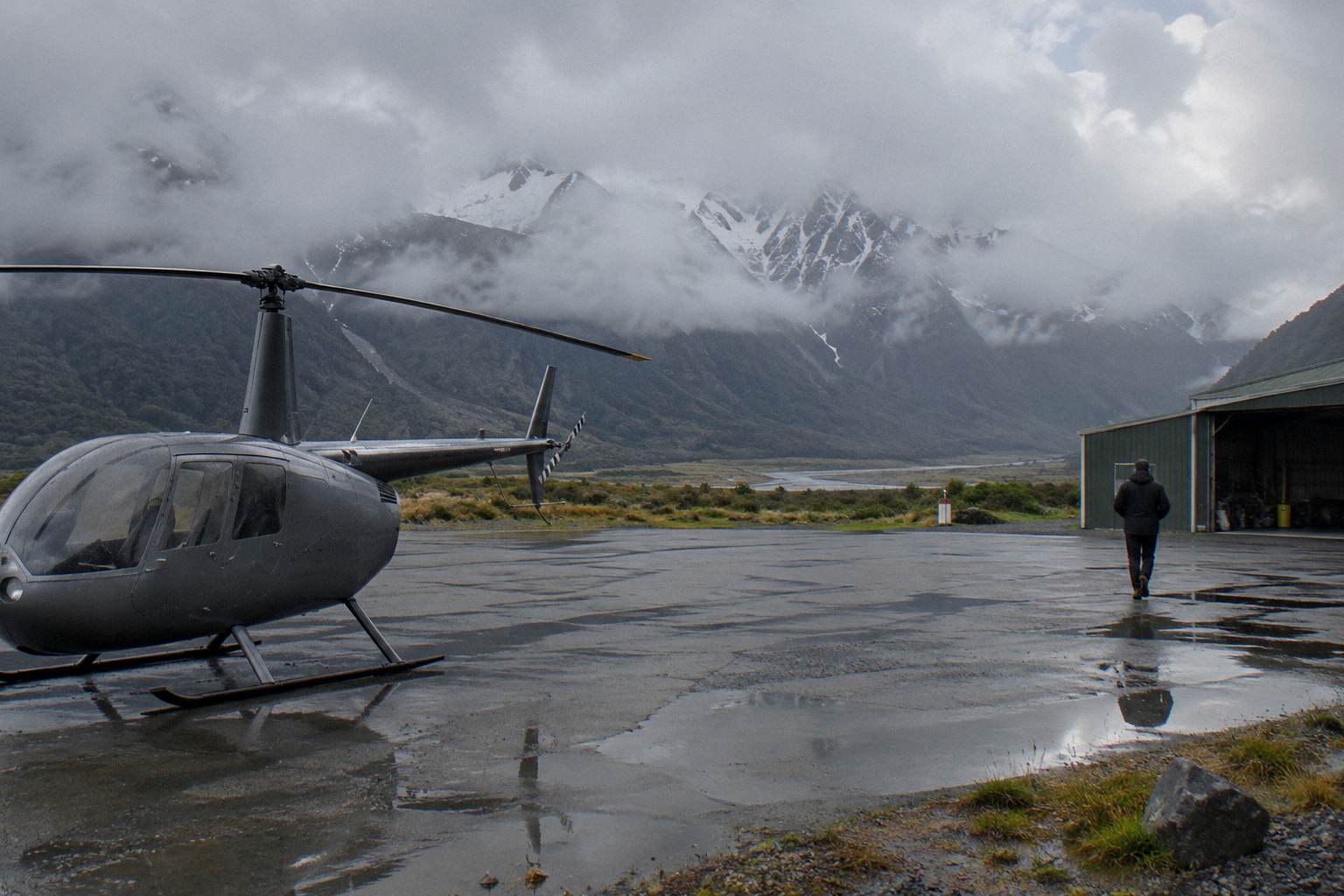
Mountain weather changes rapidly. That is The Helicopter Line's own risk wording on its Tasman heli hike page, and it is the reason no operator listed here promises a landing, a set route on the ice or any particular view. A glacier landing is planned, flown and walked only if the conditions on the day allow it, which is why every listing describes the trip as subject to favourable weather rather than as a fixed itinerary.
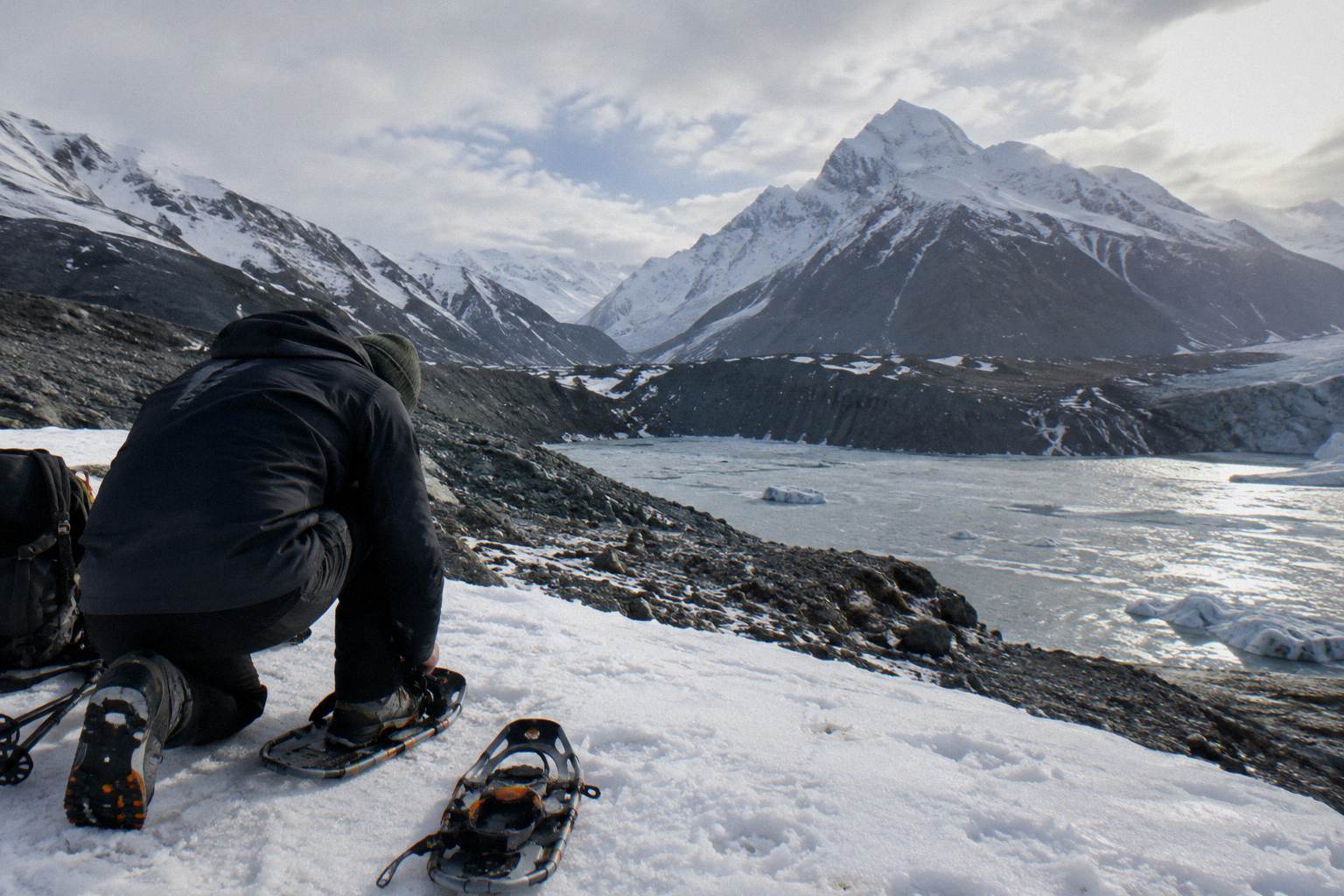
The Helicopter Line asks you to call 24 hours ahead for a weather check and to reconfirm. Where weather cancels a trip, the listing wording offers an alternative date or a full refund, and Alpine Guides states you are not charged for a bad-weather cancellation. Each listing states its own terms, so read the booking page for the specific trip before you travel rather than relying on another brand's policy.
On the listed rows here, free cancellation applies up to 24 hours before, matching the 24-hour windows in the price table above. Inside that window the operator terms take over. Snow, cloud, wind and ice condition can all change a departure, sometimes shortly before it, so keep the final day of your stay flexible if the glacier is the point of the trip.
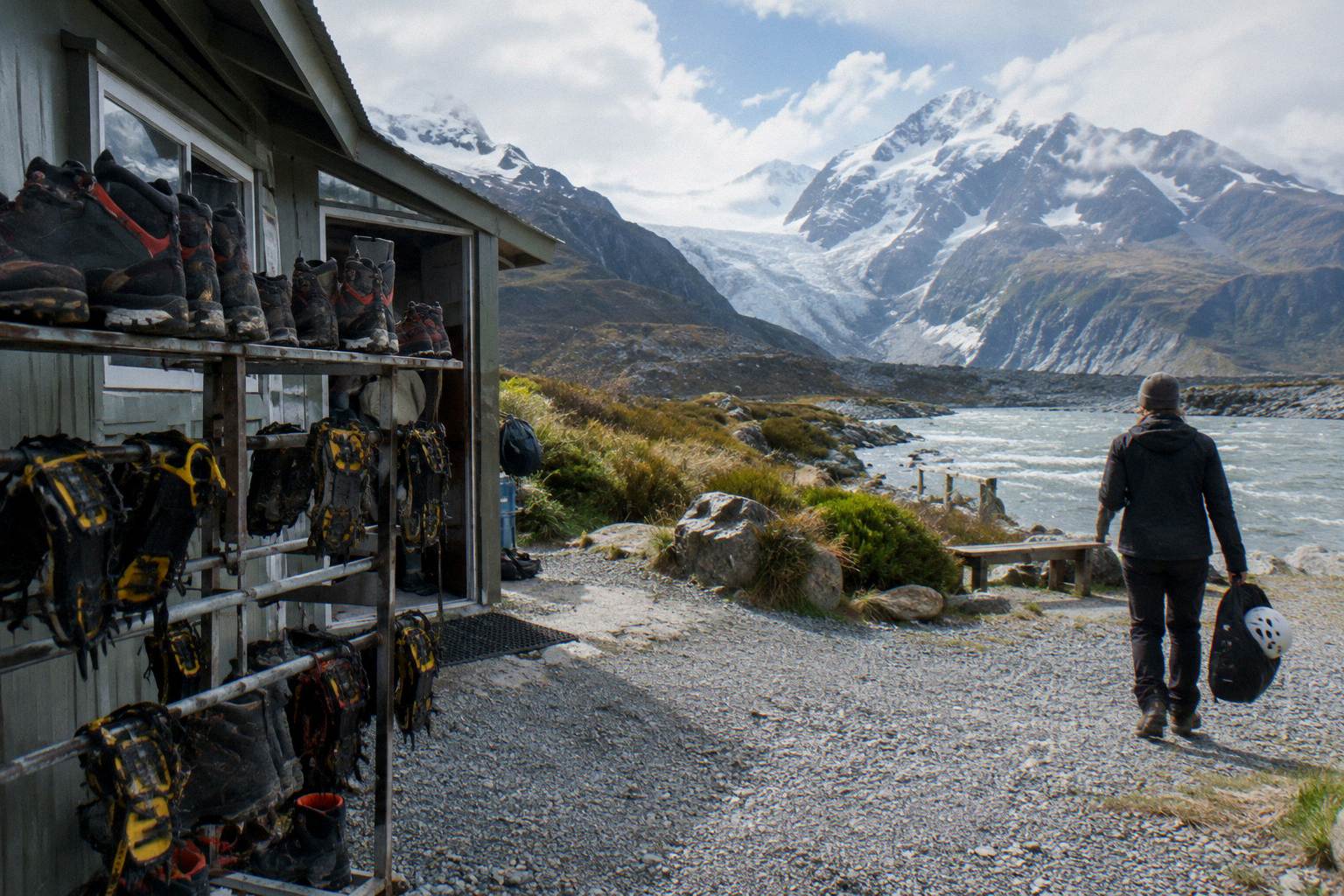
Moderate fitness: the Helicopter Line says you must be able to walk at least 1 kilometre and climb or descend stairs easily. Alpine Guides says it is not a strenuous hike but not suited to mobility problems, knee, hip or back injuries, heart conditions or vertigo.
The checklist above splits your kit three ways: what the operators provide, what you bring, and what stays behind. On the provided side, the technical gear is covered. The listings include glacier boots and crampons or snowshoes, woolen socks, walking poles and waterproof jackets and overtrousers where required. Mount Cook Ski Planes says the guide fits the crampons, and in winter the choice between crampons and snowshoes follows conditions.
Your own layers matter as much as the hardware. Mount Cook Ski Planes asks for 3 to 4 warm upper layers; Alpine Guides asks for a windproof jacket. Either way the mountain version of the packing list is the same idea: you are dressing for ice at altitude with a cold wind possible at any month of the year, then shedding layers on the walk.
Long trousers are required, and jeans are excluded by name on the operator pages, with shorts and skirts ruled out on the Alpine Guides side. Add a warm hat and gloves, sunglasses, sun block and lip balm, and a small backpack with water and snacks. The glacier reflects light hard even on overcast days, and the walk runs up to two hours on the ice with nothing to buy out there. Pack the night before: check-in at Mount Cook Airport is 15 minutes before departure for The Helicopter Line, and the operator asks that strict fly times not be delayed.
The leave-behind list is specific. Recreational drones are banned anywhere in Aoraki / Mount Cook National Park per DOC, so they stay at the hotel; commercial use needs a permit. The Helicopter Line also names power banks, iPads, loose clothing, scarves and large cameras on a strap as items not to carry. None of these are worth losing to a helicopter cabin or a katabatic wind on the ice.
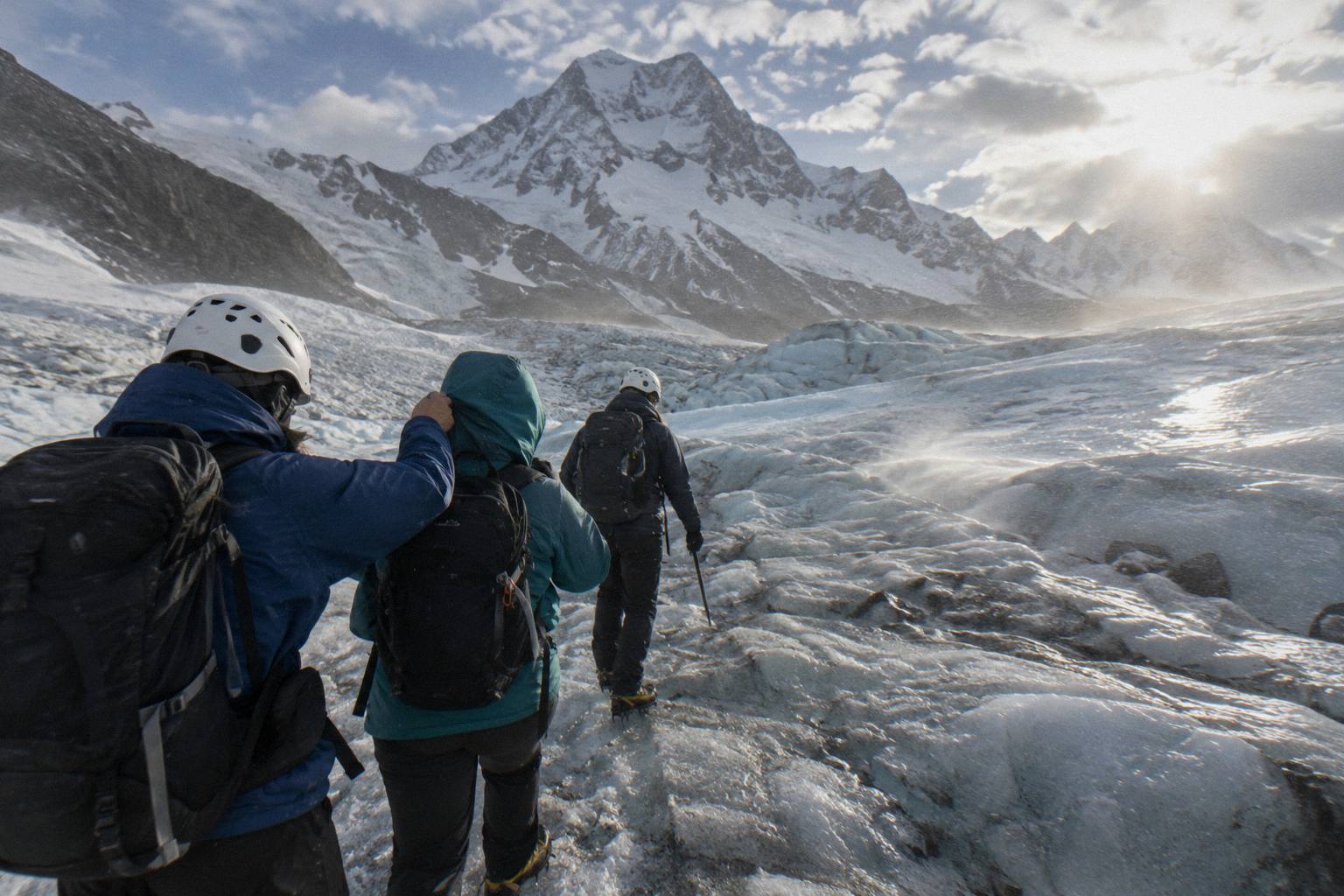
Fitness wording differs by operator and both are printed as stated. The Helicopter Line asks for moderate fitness and hiking ability: you must be able to walk at least 1 kilometre and climb or descend stairs easily. Alpine Guides calls the walk not a strenuous hike, suitable for people of average fitness, but says it is not suitable for people with mobility problems, knee, hip or back injuries, heart conditions or vertigo. The listings add that the trips are not wheelchair accessible, and the heli hike rows carry medical-condition warnings on their booking pages.
Put the two operator statements together and the summary is uneven ice underfoot, two hours of walking at altitude, and no shortcuts off the glacier. If stairs at home are a struggle, the operator pages are telling you directly that this is the wrong trip. The flights back to the airport are included, but the walking in between is not optional.
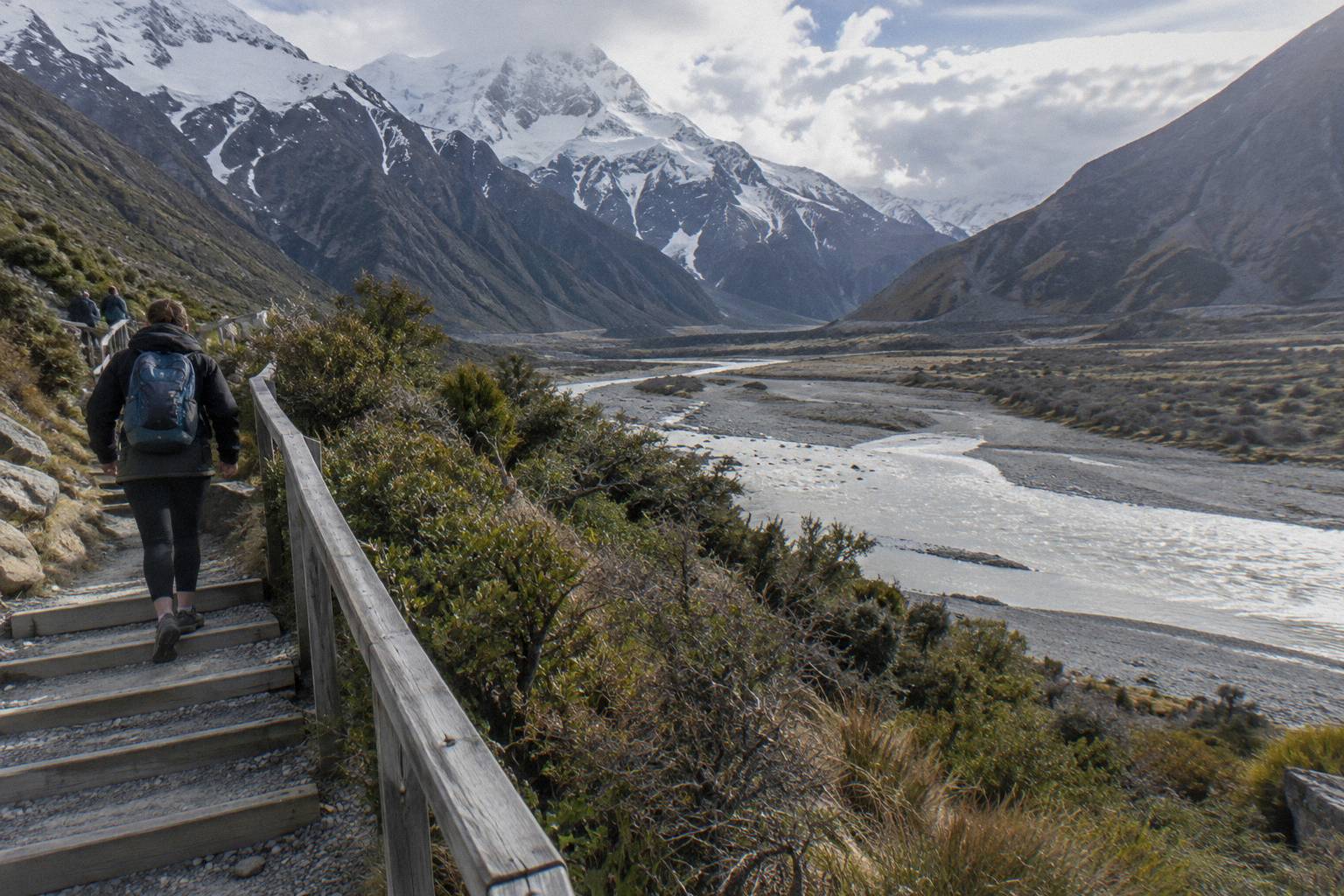
Most heli hikes at Mount Cook Airport run about 3 hours end to end, which leaves the rest of the day open. The Hooker Valley Track is the obvious pairing: 10 km return, about 3 hours per DOC, starting at White Horse Hill car park. Its second suspension bridge over the Hooker River, 189 m and described by DOC as the longest suspension bridge in New Zealand, opened in July 2026. Toilets sit about 15 minutes past that bridge.
The Tasman Glacier View Track is the shorter option at 1.5 km return and roughly 30 minutes, climbed over 300+ steps to a viewpoint on the moraine wall above Tasman Lake. A side path to the Blue Lakes adds 5 minutes one way; DOC notes the lakes were once blue, are now fed by rainwater and look green. Icebergs can appear on the lake in summer, lake ice in winter. Tasman Valley car park, the trailhead, is free and about 10 minutes' drive from the village; from the village, Tasman Valley Road is the second left after Hooker Valley Road.
Parking at White Horse Hill is paid: NZ$25 per day with unlimited entry and exit, NZ$2.50 per half hour, and the first 20 minutes free. DOC warns that the car park may be short of spaces from November to March between 10 am and 4 pm, so an early start serves both the walk and the flight.
Half day. Check in at Mount Cook Airport, fly, hike up to 2 hours on the ice, and land back with the afternoon clear. The Tasman Glacier View Track fits easily afterwards: 1.5 km return, 30 minutes, 300+ steps, with Tasman Lake below the moraine wall.
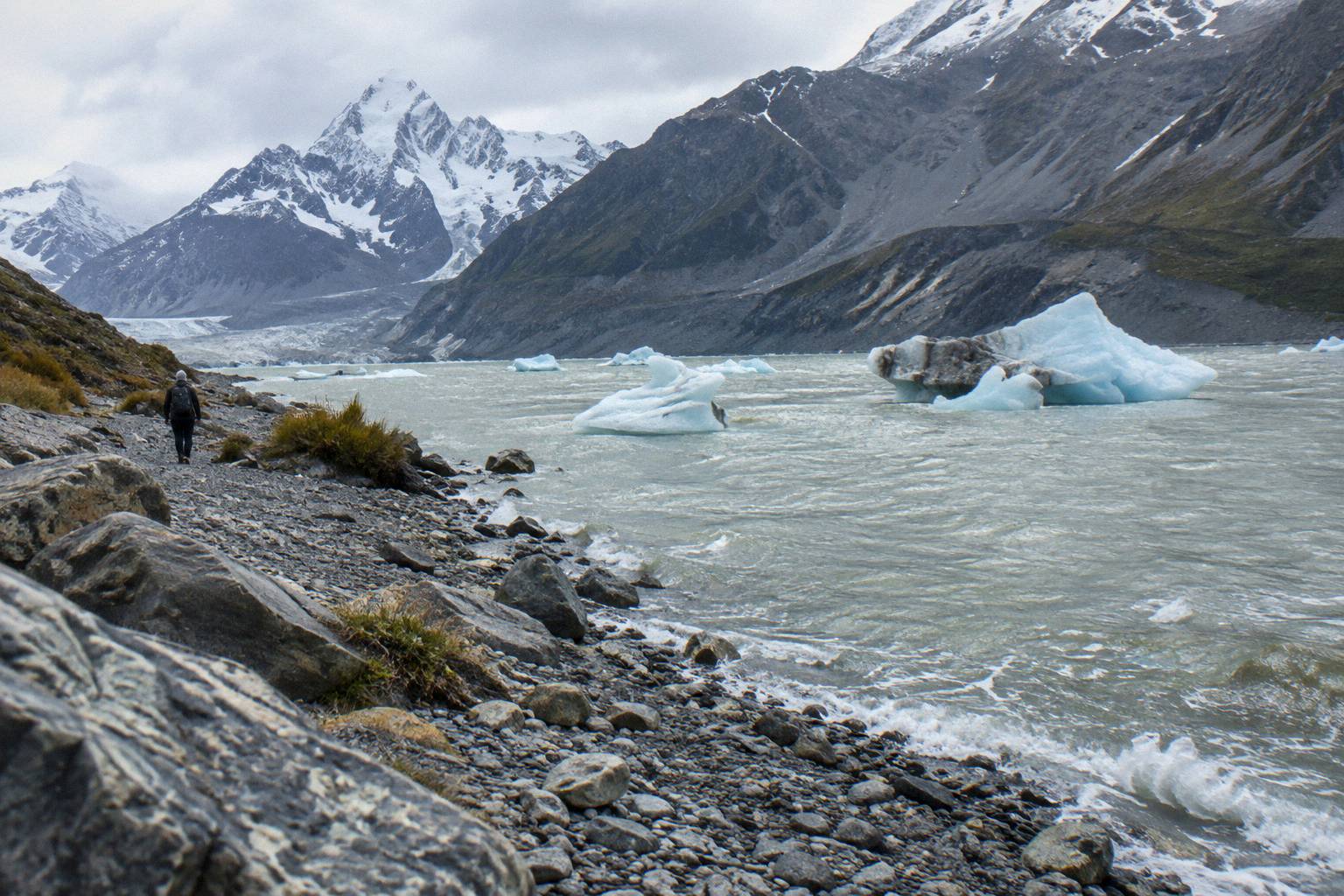
Full day. Take the heli hike in the morning, then drive 10 minutes to the Tasman Valley car park for the viewpoint, and finish with the Hooker Valley Track, 10 km return and about 3 hours, before the drive out on SH80. DOC puts Twizel an hour away and Tekapo 90 minutes.
Two days. Arrive the first day, walk the Hooker Valley Track while the light holds, then take the heli hike the next morning with a weather fallback already in mind: DOC says snow can close SH80 and winter access from June to September may be limited. If the flight cannot run, the Tasman Glacier View Track and the Blue Lakes are the on-foot alternatives, and Alpine Guides says a bad-weather cancellation is not charged.
| Trip | From, Per Person | Listing Rating | Reviews |
|---|---|---|---|
| Glacier Guiding 3-Hour Heli Hike | NZ$1,021 | 4.9 | 340+ |
| Helicopter Line 3-Hour Heli Hike | NZ$1,021 | 4.8 | 270+ |
| 55-Minute Glacier Flight | NZ$949 | Not shown | 140+ |
| 7-Hour Fly-In Heli Hike | NZ$2,149 | 4.9 | 80+ |
| 12-Hour Bus Combo, Heli Hike | NZ$1,210 | Not shown | 68 |
| 40-Minute Tasman Landing | NZ$713 | Not shown | 60+ |
| 25-Minute Alpine Landing | NZ$379 | Not shown | 54 |
| Glacier Helicopters 30-Minute Landing | Not shown | Not shown | 8 |
Across the eight bookable pages, the two Tasman Glacier heli hikes from Mount Cook Airport both start from NZ$1,021 per person for a 3 hour experience, with ratings of 4.9 (340+ reviews) for the Mt Cook Glacier Guiding trip and 4.8 (270+ reviews) for The Helicopter Line trip.
The two Queenstown starts cost more and take longer: the bus combo runs about 12 hours from NZ$1,210 per person, and the fly-in day about 7 hours from NZ$2,149 per person, the latter rated 4.9 from 80+ reviews. The bus combo carries 68 reviews.
Four flights sit alongside them. The 25 minute alpine landing flight starts from NZ$379 per person, the 40 minute Tasman landing flight from NZ$713, and the 55 minute glacier flight from NZ$949. All four flight pages carry no rating, and the Glacier Helicopters 30 minute flight shows no price on its listing, so its cost is only on the booking page itself.
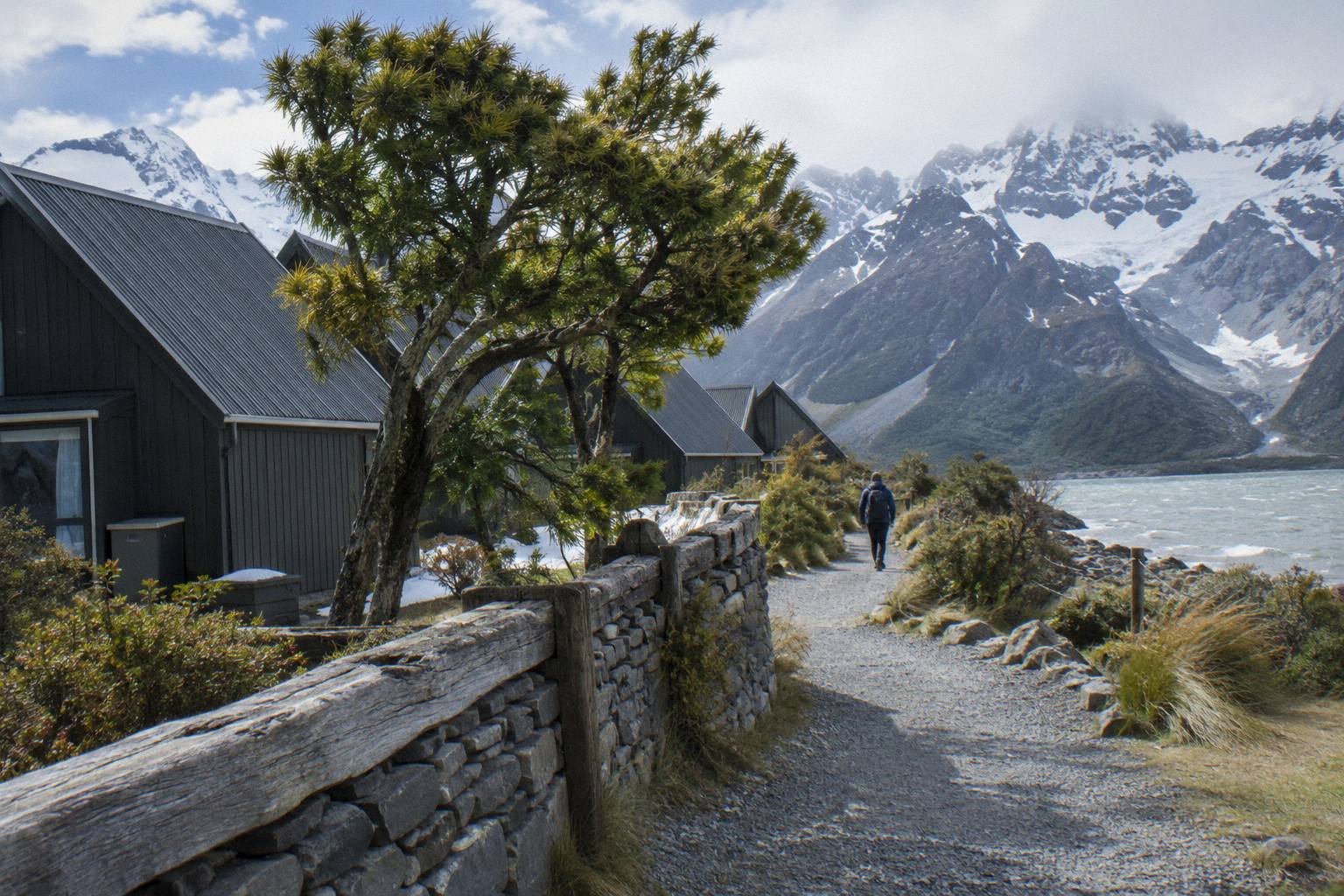
Check-in for both Tasman heli hikes is at Mount Cook Airport, so the village itself is the closest base: minutes from the terminal, with no drive before an early flight. DOC describes village eating as limited, a day shelter, visitor centre, petrol station and a small number of cafes, restaurants and bars. Supermarkets are further out: DOC lists Twizel, an hour away, and Tekapo, 90 minutes, as the nearest places to stock up.
Twizel and Tekapo trade the early start for more choice and, usually, lower rates. An hour's drive before check-in is workable in clear conditions, but DOC warns that snow can close SH80 and winter access may be limited from June to September, which makes the village the safer base when the forecast is marginal. The Helicopter Line asks passengers to call 24 hours ahead for a weather check, so the drive decision can be made the evening before.
The hotel cards below show current tiers and areas across the village, Twizel and Lake Tekapo, from upper-tier stays on Terrace Road in Aoraki / Mount Cook Village to budget and mid-range rooms in Twizel and mid-range options on Rapuwai Lane at Lake Tekapo. Compare the drive times against your check-in time before booking.
Terrace Road, Aoraki / Mount Cook Village
Check ratesBowen Drive, Aoraki / Mount Cook Village
Check ratesMackenzie Drive, Twizel
Check rates
The Mount Cook Ski Planes page for its guided hike says 3 hours total with up to 2 hours on the glacier, weather permitting. The Helicopter Line asks you to allow about 3 hours for the whole experience including flights and check-in, with a 2 hour guided hike, while Alpine Guides states 3.5 hours and up to 2 hours on the ice. Operators word the figures differently, so time on the ice is always described as up to 2 hours rather than fixed.
It depends on which operator you book. The Mount Cook Ski Planes page for the Mt Cook Glacier Guiding hike sets the minimum age at 9, with under-18s needing parental or guardian consent. The Helicopter Line and Alpine Guides both state a minimum age of 10, Alpine Guides with a parent or guardian aged 18 or over accompanying. The two listings carry these operator figures, so check the specific booking page for the trip you want.
The only stated limit for the hike is The Helicopter Line's: its operator page says the maximum allowable weight for a person in a rear helicopter seat is 150 kg, and this applies to that operator only. No weight limit is stated on the Mt Cook Glacier Guiding listing. Some scenic flight listings carry different per-passenger figures, including 150 kg, 165 kg and 200 kg by operator, so never assume one limit covers every trip.
The Helicopter Line asks for moderate fitness and hiking ability, and says you must be able to walk at least 1 kilometre and climb or descend stairs easily. Alpine Guides calls it not a strenuous hike, suitable for people of average fitness, but not suitable for those with mobility problems, knee, hip or back injuries, heart conditions or vertigo. The listings also state the trip is not wheelchair accessible.
Operators provide the technical gear: glacier boots, crampons or snowshoes, socks and waterproof jackets where required, and Mt Cook Glacier Guiding fits crampons in summer and crampons or snowshoes in winter. You should bring 3 to 4 warm upper layers or a windproof jacket, long trousers rather than jeans, warm hat and gloves, sunglasses, sun block and lip balm, and a small backpack with water and snacks. Walking poles are provided.
The Helicopter Line asks you to leave behind bags, jeans, drones, power banks, iPads, loose clothing and scarves, plus large cameras on a strap. Drones deserve special mention in this park: DOC states recreational drones are not allowed anywhere in Aoraki / Mount Cook National Park, and commercial drone use needs a permit. The Mount Cook Ski Planes ski-plane trip also lists no selfie sticks or drones.
Each listed trip carries its own terms, and the listed trips show free cancellation up to 24 hours before. Beyond that the operators differ: The Helicopter Line gives a full refund or credit with 24 hours notice and the same on operator weather cancellation, while Alpine Guides does not charge for bad-weather cancellations. The listings state that if a trip is cancelled for poor weather the traveller gets an alternative date or a full refund. Terms for other brands differ, so read your booking page.
No. Every operator describes the hike as weather permitting, with up to 2 hours on the glacier rather than a fixed block of time. The Helicopter Line page discloses hazards including falling rocks, ice cliffs, crevasses, changing snow conditions and icy surfaces, and notes that mountain weather changes rapidly. The listing terms say that if weather cancels the trip you get an alternative date or a full refund.
Alpine Guides states the trip runs all year round. Mount Cook Ski Planes says crampons are used in summer and crampons or snowshoes in winter. DOC cautions that winter access to the park may be limited from June to September by snow and that snow can close SH80, the road to the village, so the trip can operate but reaching Mount Cook Airport becomes the practical question in cold months.
The Mt Cook Glacier Guiding listing caps the group at 11, and the Mount Cook Ski Planes page sets a minimum of 4 people for the trip to depart, moving smaller groups to other trips where possible. The Helicopter Line listing allows up to 20, and Alpine Guides states a minimum of 4 per helicopter load with a guide ratio of 1:12. The Queenstown fly-in trip takes up to 11.
Yes, a camera is on the Mount Cook Ski Planes bring list for the hike. The restriction is on size and type: The Helicopter Line asks you to leave large cameras on a strap behind, along with iPads, power banks, drones, loose clothing and scarves. Drones in particular are banned for recreational use throughout the national park per DOC. A small camera that fits in your pack suits the trip best.
Essentially, yes. Three brands sell the same glacier hike from Mount Cook Airport: Mt Cook Glacier Guiding, which uses Mount Cook Ski Planes and Helicopters aircraft, The Helicopter Line, whose hike is guided by Alpine Guides, and Southern Alps Guiding, which is not listed here. The brands differ on details such as minimum age, stated duration and cancellation terms, and the operator pages list NZ$995 for their own versions. We present each booking page on its own figures rather than merging them.
Yes, in two ways listed here. Cheeky Kiwi Travel runs a roughly 12 hour small-group bus day from Queenstown that includes the Tasman Glacier heli hike with two scenic helicopter flights. True South Flights offers a fly-in day from about 7 hours from NZ$2,149 per person, with a fixed-wing flight to Mount Cook, a helicopter flight to the glacier and about 2 hours of guided hiking.
Four flights compared here run 25 to 55 minutes with an alpine snow landing, from NZ$379 per person for the 25-minute INFLITE flight through NZ$713 for a 40-minute Helicopter Line Tasman flight to NZ$949 for the 55-minute flight taking in Aoraki / Mount Cook, the Tasman Glacier and West Coast glaciers. Glacier Helicopters runs a 30-minute landing flight. All are weather dependent.